
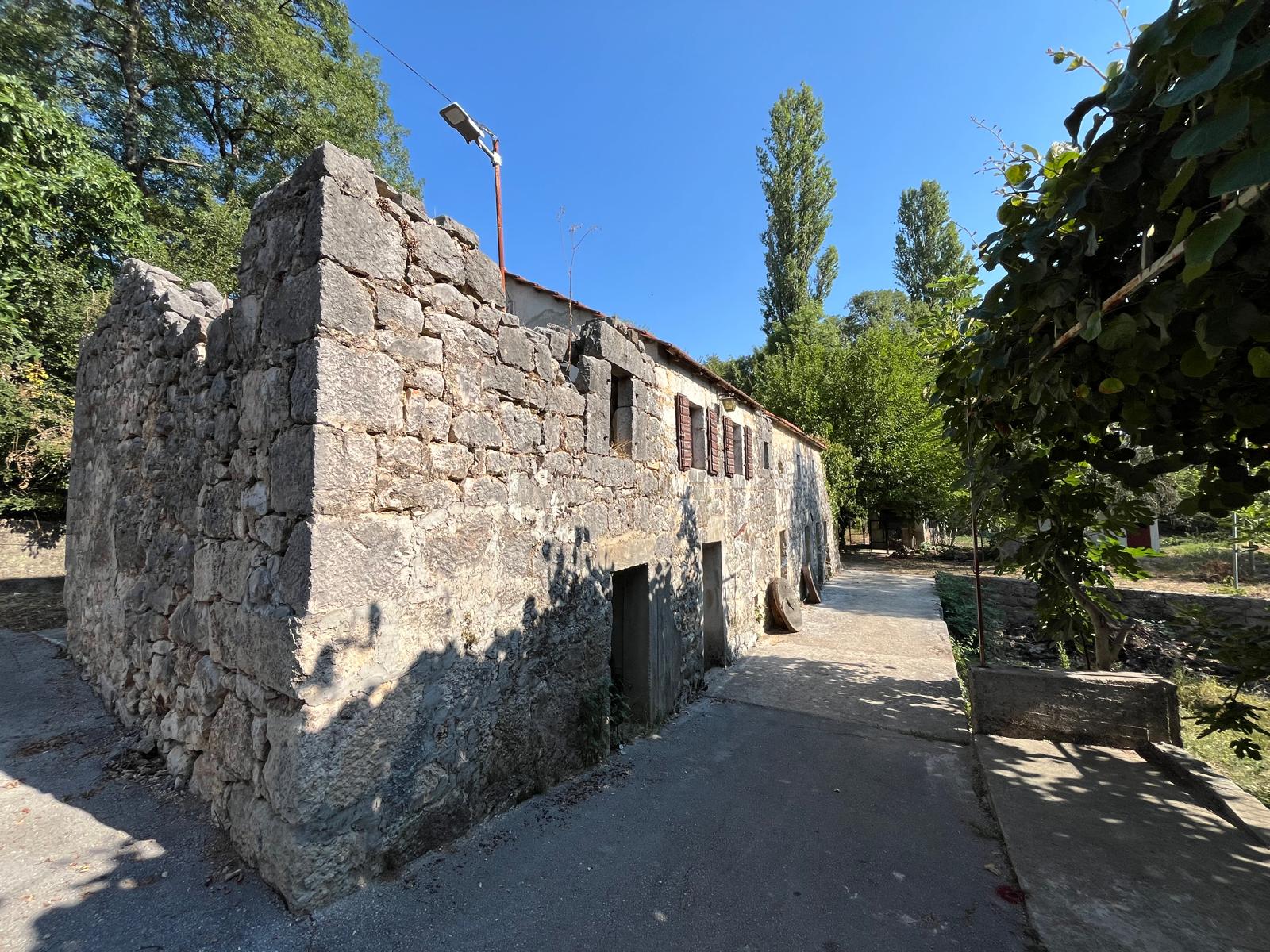
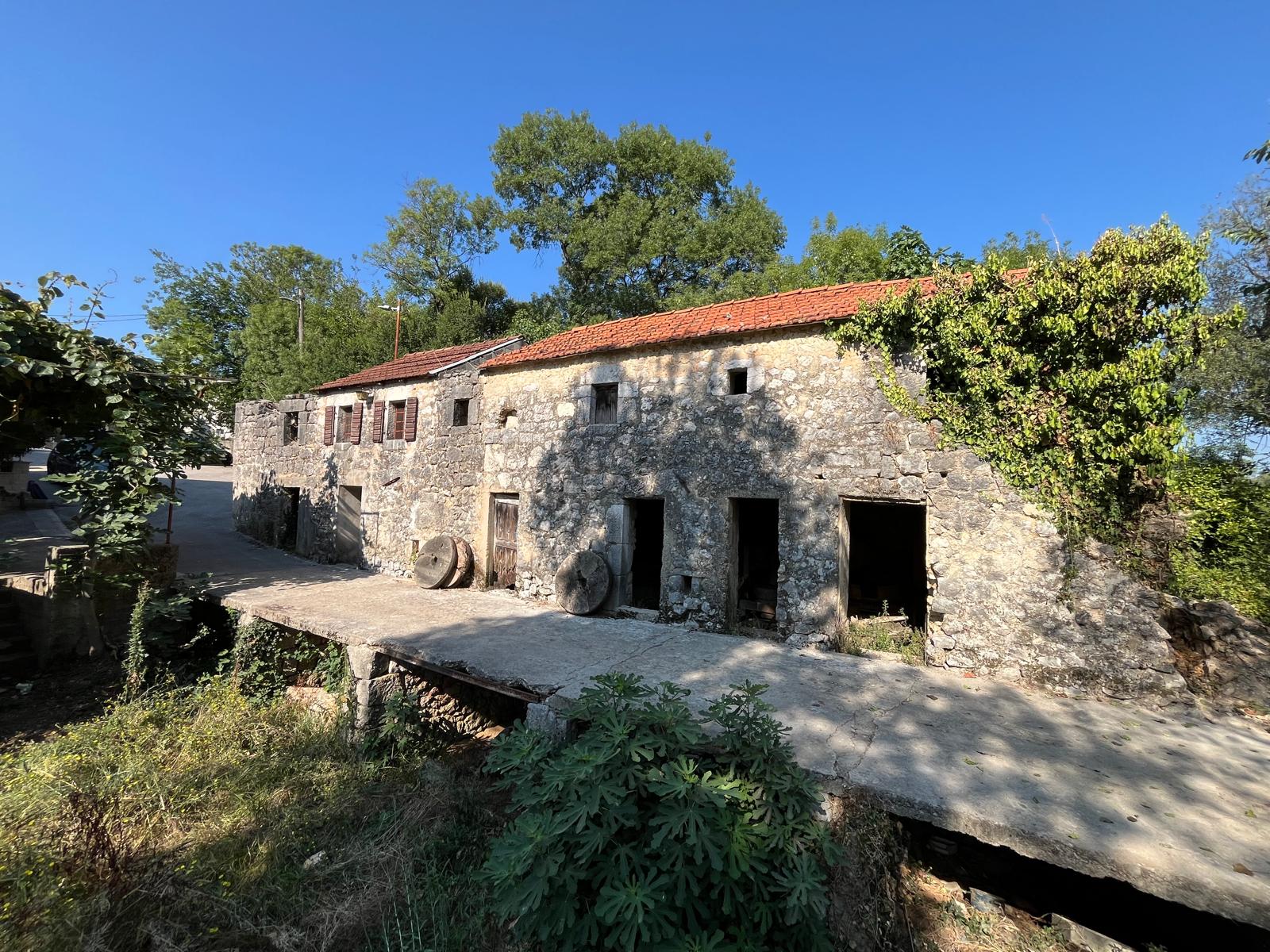
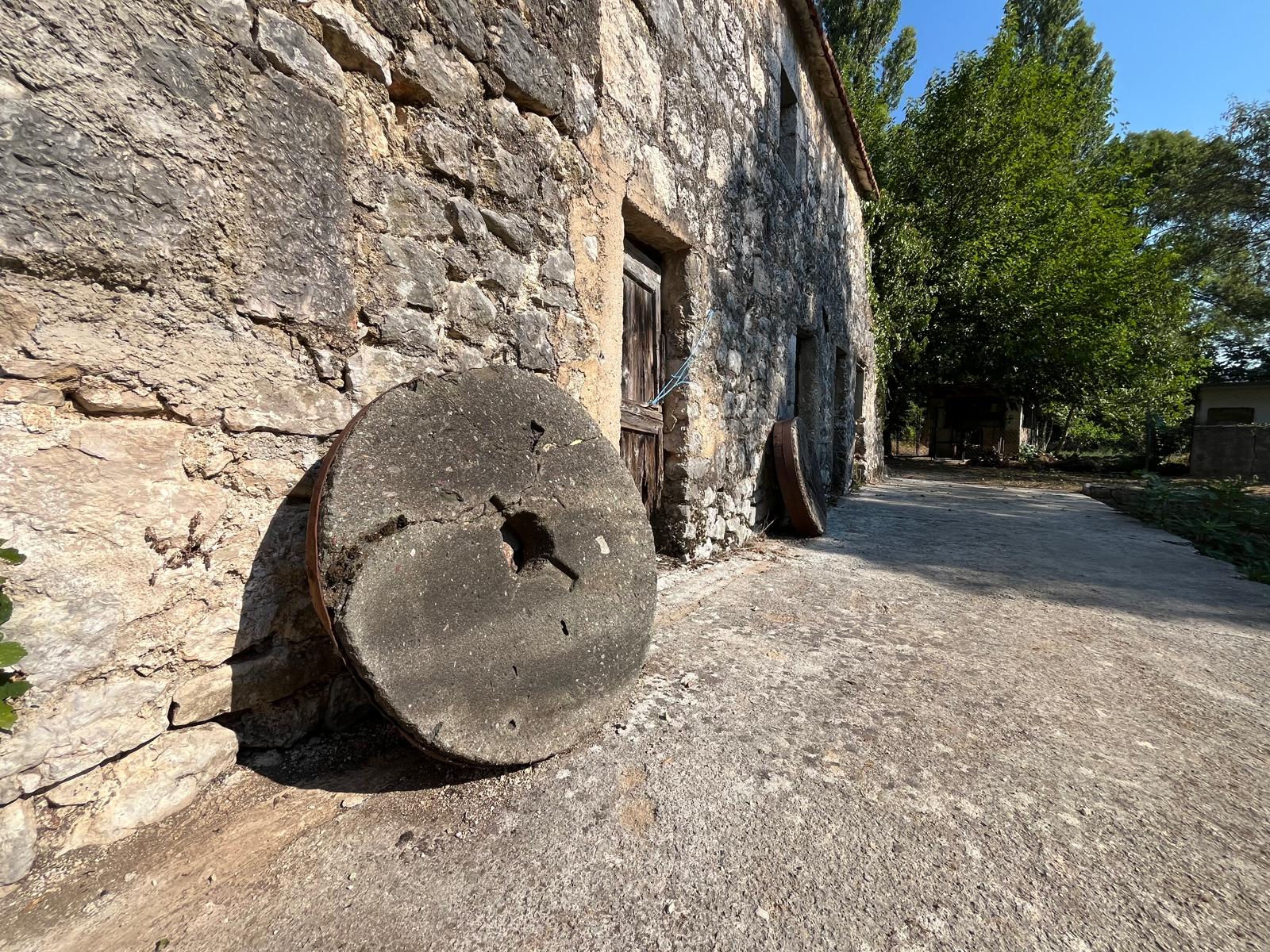
Markićuša Watermill is located on the right bank of the Vrljika River, west of the bridge in the village of Kamenmost. It is a valuable example of the traditional architectural heritage of the Imotski region and reflects the area's former way of life.The building is a two-storey rectangular structure constructed from irregularly cut local stone of various sizes. It is covered with a gabled tiled roof, a characteristic feature of the architecture of its time. The ground floor once housed ten watermills used for grinding grain, while the upper floor served as storage space.The mill is believed to have been built during the 18th or 19th century, when watermills played an important role in the local economy. Its location beside the Vrljika River allowed the power of flowing water to be harnessed for milling throughout most of the year.Today, Markićuša Watermill is an important historical landmark that preserves the rich tradition and cultural heritage of the Imotski region.
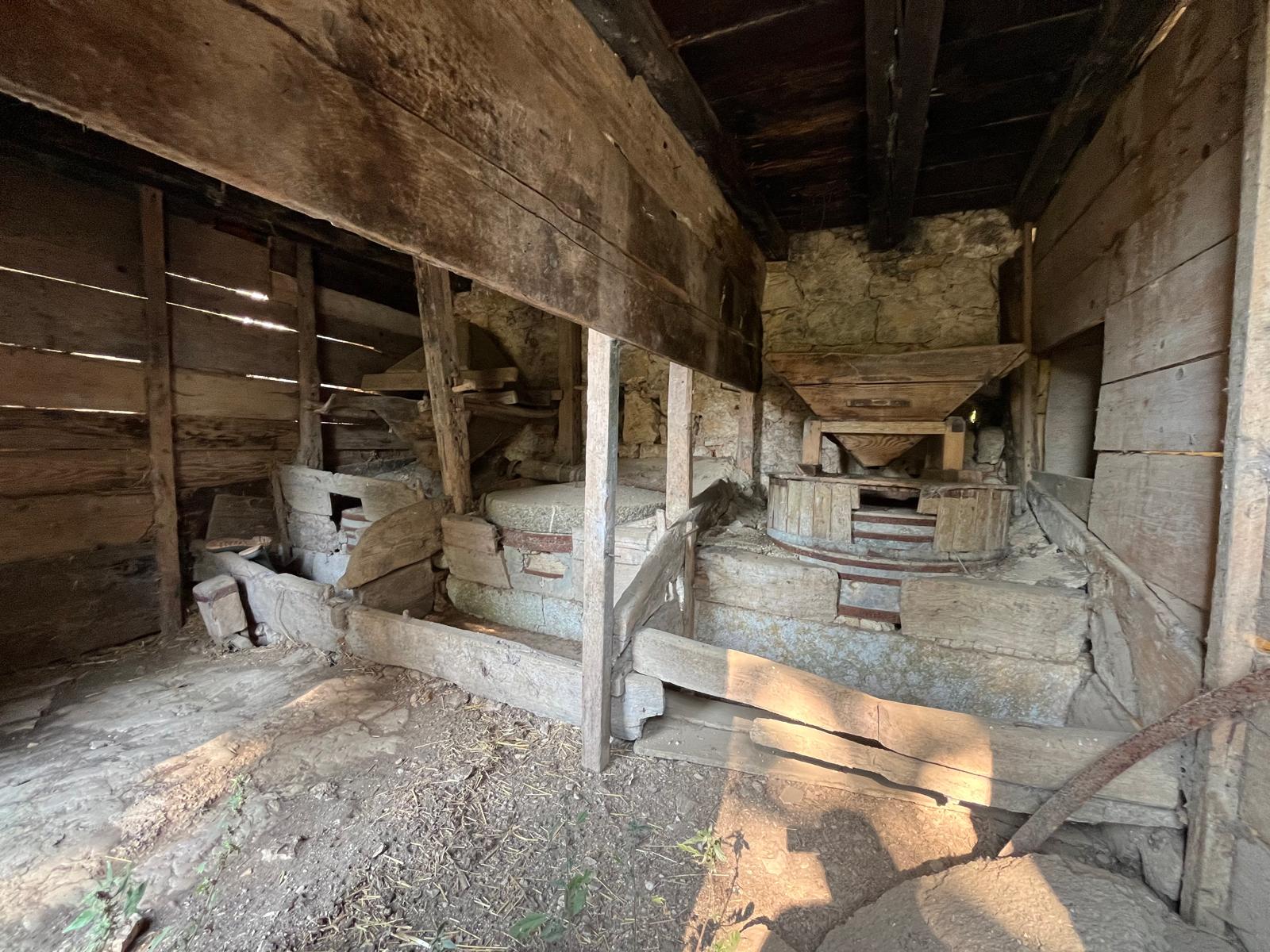
Patrlj Watermill is located on the left bank of the Vrljika River in the village of Kamenmost. It is an important example of the traditional industrial architecture of the Imotski region.The mill was built from irregularly cut local stone, giving it the rustic and authentic appearance typical of the area. It has a rectangular floor plan and is covered with a gabled tiled roof. Patrlj belongs to the type of watermills powered by an external horizontal waterwheel, locally known as a "tumbaz" mill.Compared with other watermills in the surrounding area, Patrlj is larger in size, reflecting its former importance. One of its most valuable features is its relatively well-preserved internal milling mechanism. Its location on the banks of the Vrljika River enabled the mill to harness the river's water power to operate its machinery. Today, Patrlj Watermill stands as an important cultural monument, preserving the tradition and heritage of the Imotski region.