
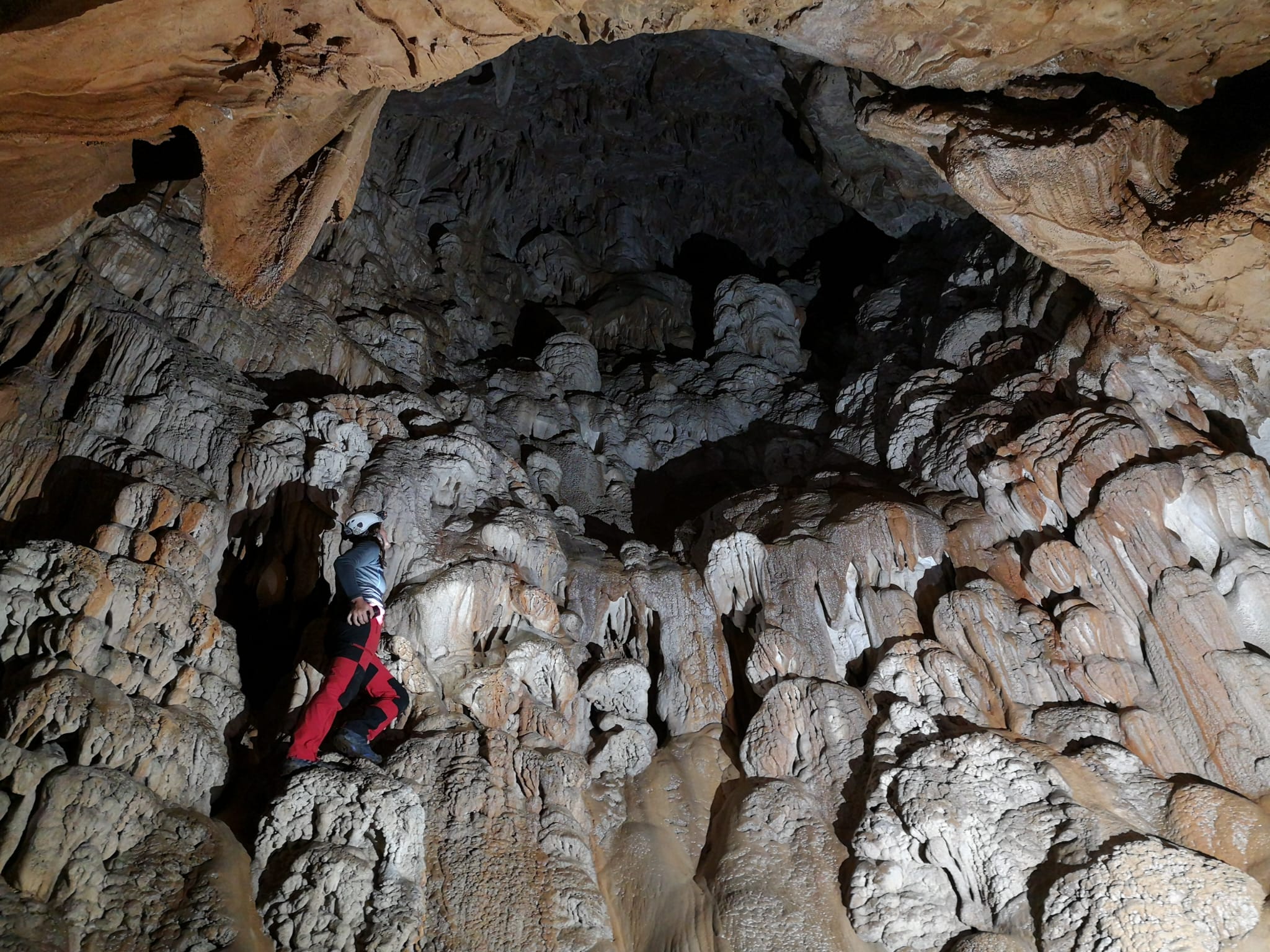
Petar's Cave is an important historical site associated with the history of the people of the Imotski region during the period of Ottoman incursions.
According to local tradition, around the year 1700, three brothers – Filip, Nikola, and Marko – sought refuge in the cave together with their families. At the entrance to the cave, traces indicating the former existence of wooden doors can still be seen, suggesting they were installed to provide additional protection for those sheltering inside.
Near the cave are three traditional stone cisterns used for collecting rainwater, each believed to have belonged to one of the three families. Their remarkable craftsmanship reflects the exceptional building skills of the local inhabitants of that time. It is also believed that the ancestors of these families were highly skilled blacksmiths and metal craftsmen, a tradition associated with the origin of the surname Kujundžić.
As the cave could not provide permanent shelter for the growing community, the families gradually settled in the surrounding villages. Local tradition also connects Ivan with the origin of the name Ivanbegovina, while the hamlet of Kujundžić Lujan is believed to have been named after Luka, who remained living near the cave.
Today, due to its historical and cultural significance, Petar's Cave is considered an important heritage site that deserves further archaeological research, preservation, and inclusion in the region's tourism and educational offerings.